Creativity and Conservation Bring a Lost Species Back to our Community:
This weekend, two local and internationally renowned artists opened their studios and invited the public to engage with thought-provoking artworks that highlight the epic decline and renewed hope for our local population of a much-loved and environmentally important species.
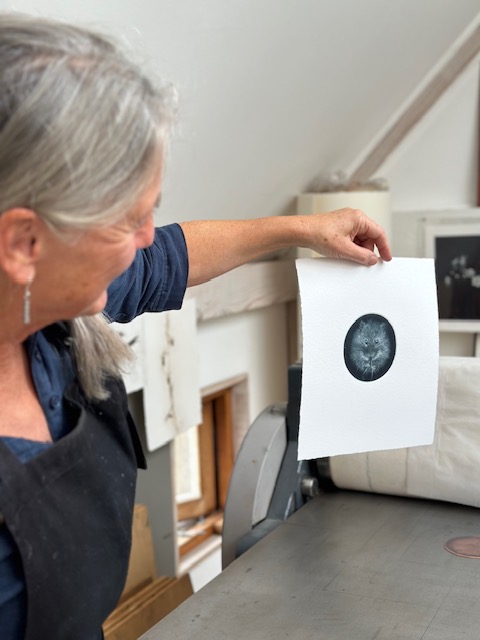
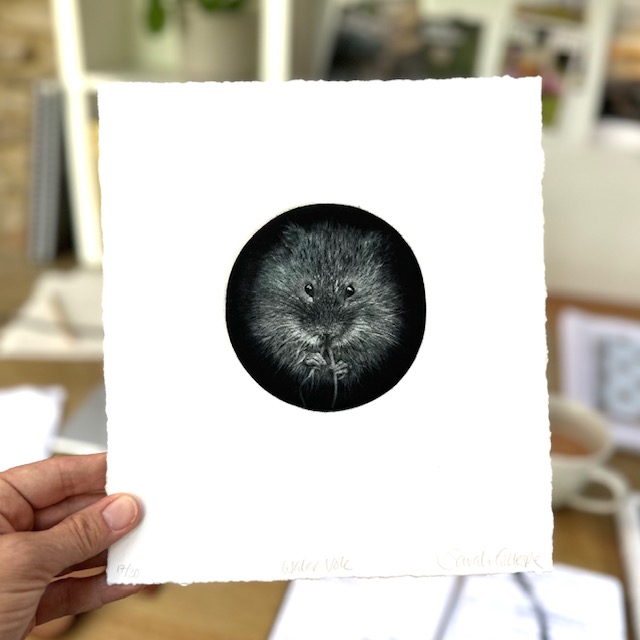
Gently peeling paper from a copper plate, Sarah Gillespie revealed the enchanting face of a water vole. Its thoughtful eyes tell the story of both the past and the future. The mezzotint process that Sarah uses dates back to a time when our landscape was home to countless water voles, who supported and thrived in a much richer habitat than we know today. However, their loss from our landscape, primarily due to habitat destruction and predation by non-native American mink, is now slowly being reversed by a local reintroduction project driven by a group of passionate volunteers.
Sarah opened her studio this weekend and invited the community to share in the process of printing a limited edition of water vole images that were sold to raise funds for the River Gara Water Vole Reintroduction Project. The face looking out from the print expresses the deep connection between the artist and the natural world. From the experience of releasing voles and quietly observing them in their habitat to the time spent meticulously engraving every mark, Sarah’s unique connection and commitment to this precious creature is tangible.
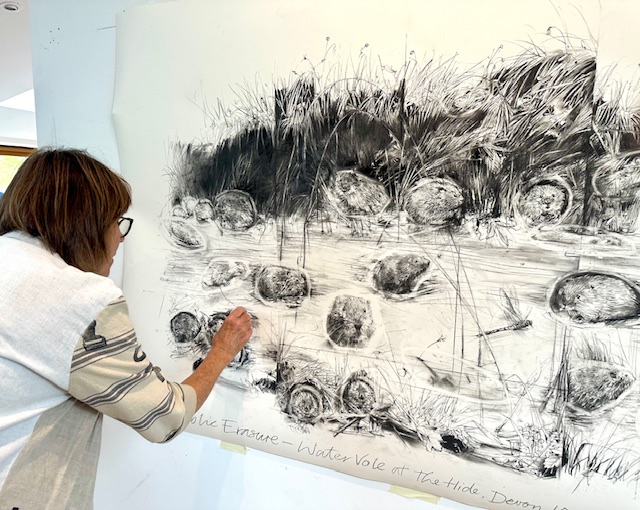
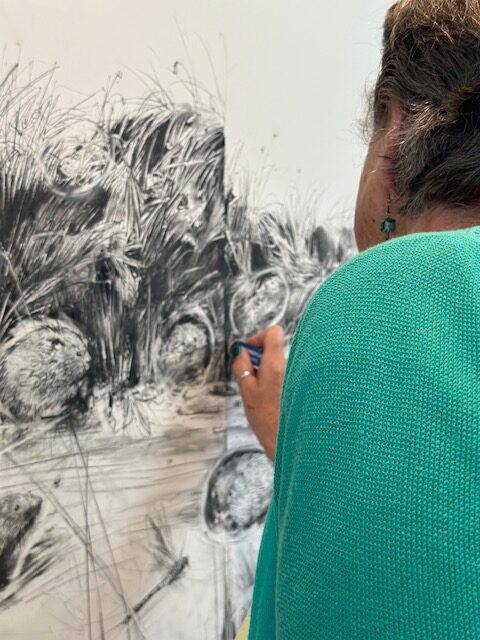
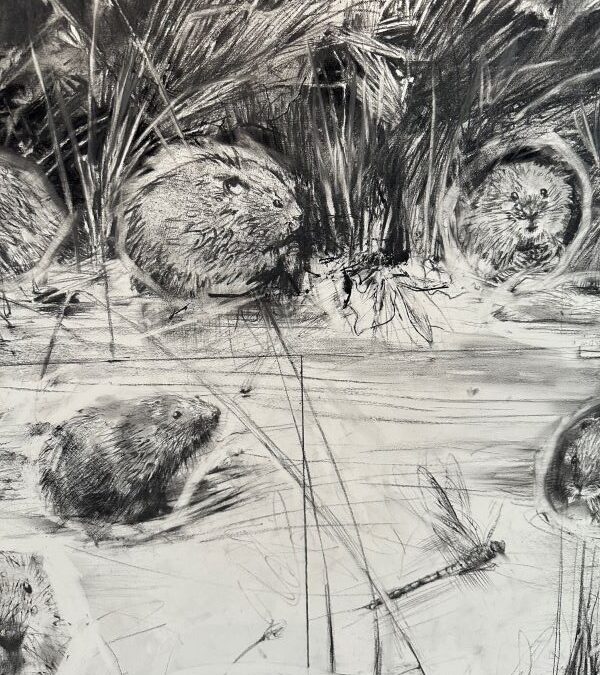
Just a few miles away, Frances Gynn also spent the weekend welcoming visitors to her studio. Fran created an enormous and stunning water vole montage masterpiece for a public erasure event, which was opened by Derek Gow, an inspirational speaker and lost species champion. Fran then invited her guests to erase these beautiful water vole drawings, one heart-wrenching stroke at a time. The act of rubbing out the gorgeous graphite creatures reflected the catastrophic depletion we have caused this keystone species in the wild and was hard to witness.
The passion and generosity of these two remarkable women not only raised over £4,000 but also brought the community together to support the efforts of a small group of individuals. Members of The Habitat Group have worked tirelessly over the last few years to champion the vital importance of water voles to our ecosystem and to return them to swim once more in the River Gara, more than 50 years after they were lost from the valley.
Water voles are considered a keystone species, meaning they have a disproportionately positive effect on the ecosystem. By nibbling riverside vegetation, they create flower-rich banks with greatly increased plant diversity. This benefits numerous species, including bees, moths, butterflies, and other pollinators, and subsequently the mammals, birds, and bats that feed upon these insects.
The intricate cycle of nature also finds water voles themselves on the menu, and their presence supports magnificent predators such as otters, stoats, and herons. Water vole burrows also provide refuge and protected breeding sites for other small mammals, reptiles, and amphibians.
The water voles for the River Gara Reintroduction Project were bred locally, and after two years of preparation and careful monitoring of the site, 200 were released into the river last autumn and a further 200 this spring. The next phase of the reintroduction takes place at the end of August, and when the final release is complete next year, the project will have put 800 water voles back into the River Gara, which flows down through a quiet valley to Slapton Ley. Look out for them next time you are walking around the ley.
Article written for The Dartmouth Chronicle, August 2024.