
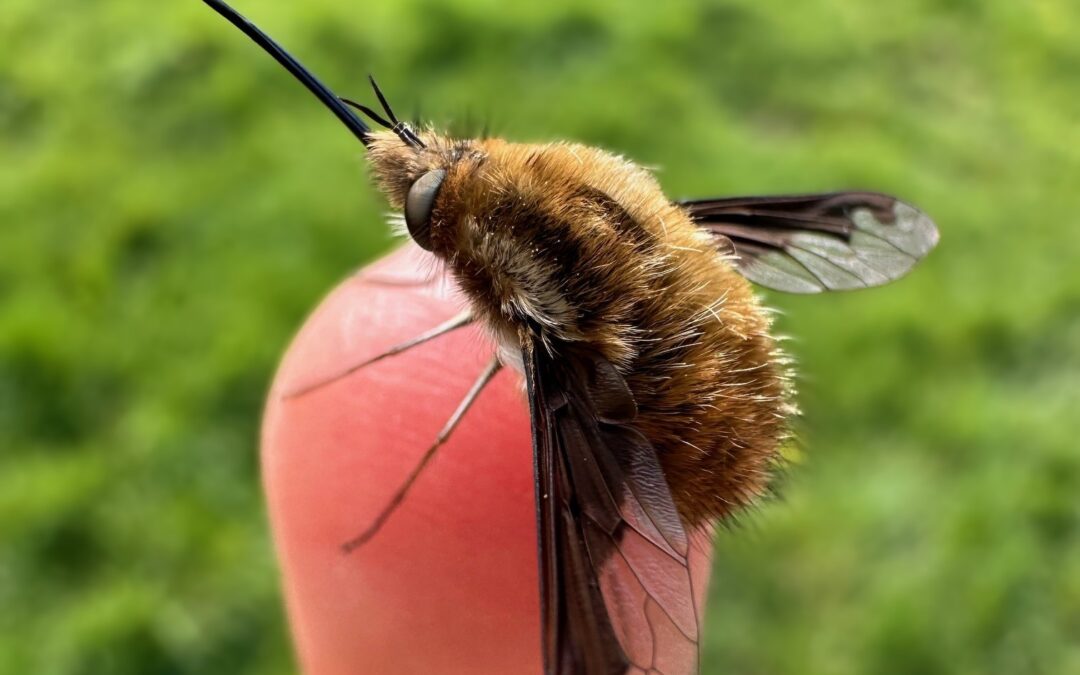
This gorgeous creature is not, as it may first appear, a small bumblebee with a long stinger on the wrong end, but in fact belongs to the fly family. This is a Dark-edged Bee-fly and the beautiful long spike is its proboscis, which it uses to sip nectar from deep flowers like Primroses.
Before takeoff, Bee-flies warm their flight muscles by whirring their wings. They need a little heat and will only take flight in warm weather. When the weather is cool or damp, they hide under leaves to stay dry.
The Dark-edged Bee-fly is the most prevalent bee-fly species in the UK, found in many habitats from gardens to woodlands and coastal areas. However, they tend to gravitate towards habitats favored by mining bees, as the larvae parasitise their nests. The adults can sometimes be seen flicking their eggs onto the ground near mining bee nesting areas.
Early spring is a good time of the year to look out for these creatures as male Dark-edged Bee-flies engage in elaborate courtship displays. They showcase their prowess by hovering high in the air, darting at rivals and spinning to attract potential mates.
Understanding a little about the wildlife we see helps us reconnect with the natural world of which we are part.