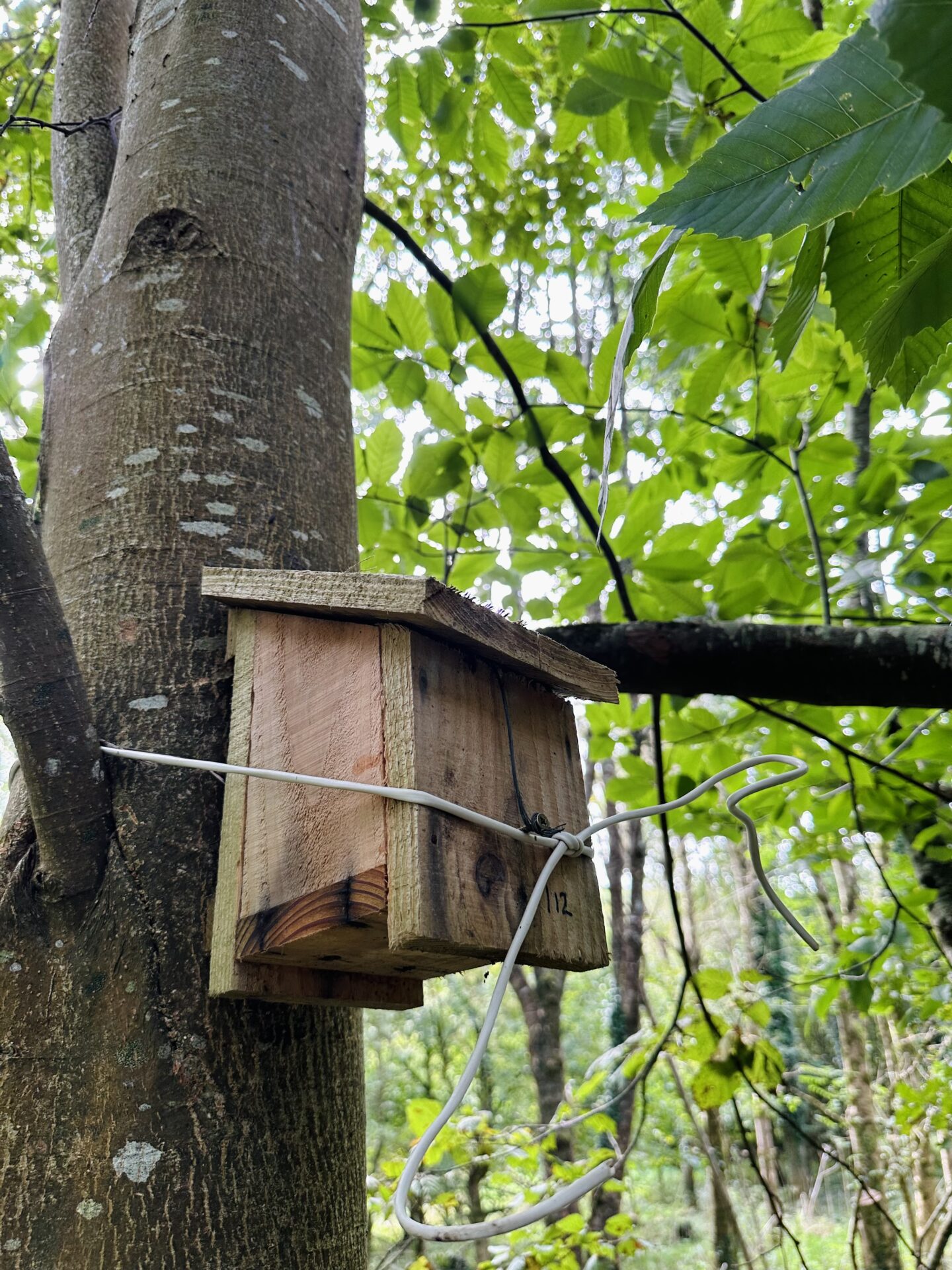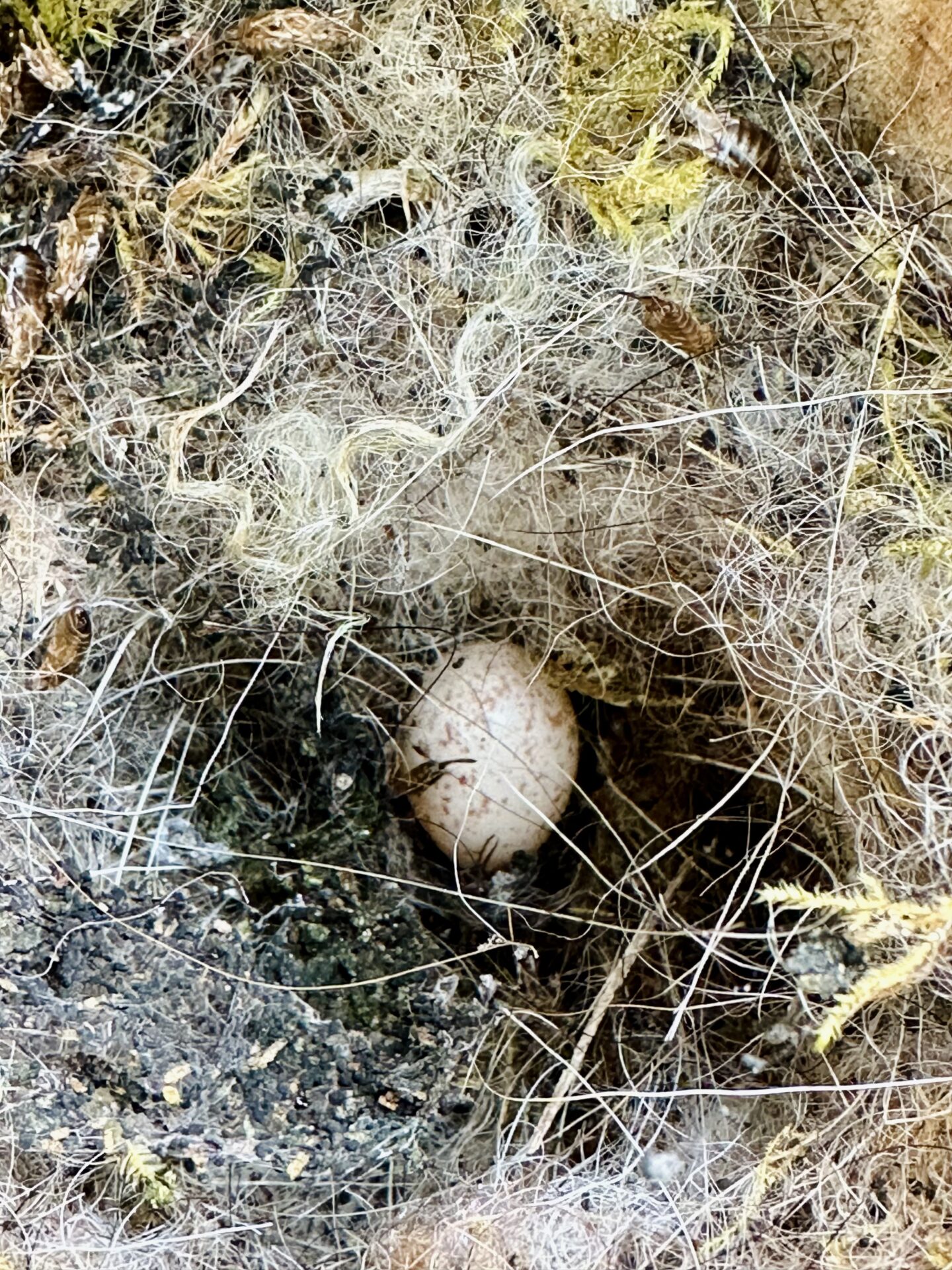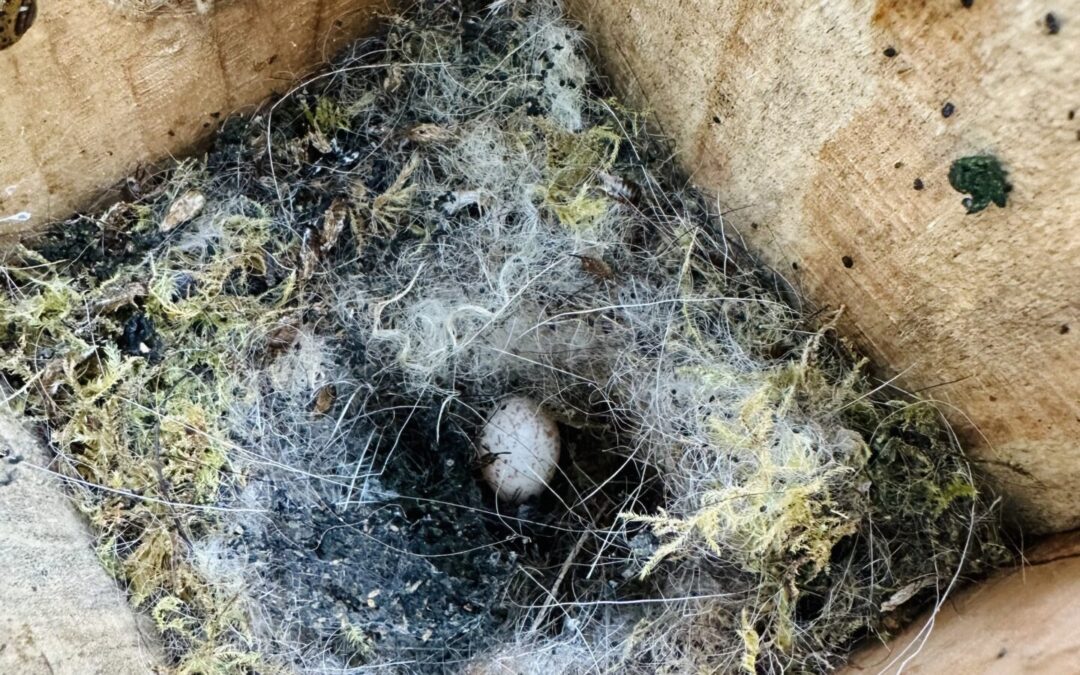
We discovered evidence of all manner of wildlife making use of the dormouse boxes when we checked them yesterday. Notably a number of bird nests.
The boxes were put up in a small broadleaf woodland about 18 months ago and they could easily be mistaken for bird boxes. The only difference is that the hole is in the back of the box where a couple of batons keep it away from the trunk of the tree to allow the dormice inside.
Full of hope and anticipation we took our first peek inside. Slugs, snails, earwigs, millipedes and more had taken up residence in many of the boxes, all vital creatures to sustain the rich biodiversity of the woodland, but not a dormouse. So imagine my excitement when we discovered the first bird nest. And then another and another.
Always learning, I turned to the magical interweb to find out more. Who might these nests belong to?
It seems that small birds such as blue tits and great tits often use dormice boxes. While this appears at first to be a good use for our nest boxes until the dormice find their way to the woodland, it turns out it might actually not be so good for the local ecosystem. If one species of bird is favoured by our support and becomes more successful or dominant it may have an effect on other species, particularly those that share the same ecological niche. For example, if a greater population of blue tits are busy eating all the insects that the less common coal tit or willow tit also rely upon, the populations of the less dominant birds may be reduced.
So I wondered if it would be possible to adapt our dormouse boxes to prevent their use by birds. I think not. However, the Brampton dormouse box has been developed to prevent use by nesting birds and has been used very successfully by The Wildlife Trust for BCN and other dormouse conservation projects.
The question now is to rebuild or not to rebuild? Anyone who knows me will know the answer to that. If a job’s worth doing…