
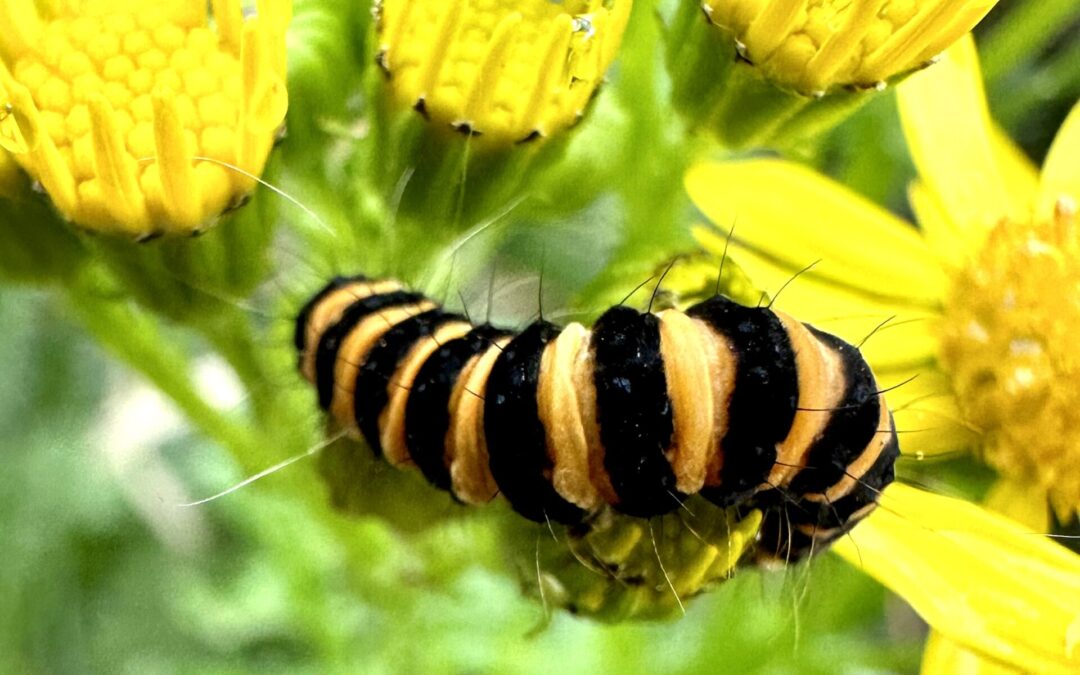
Look what I found!
These unmistakable caterpillars evoke a vivid childhood memory for me. They are also a stark reminder of shifting baselines.
A shifting baseline occurs where one generation perceives the environmental conditions of their time as the normal state although they are significantly degraded when compared to previous generations.
As a child these cinnabar moth caterpillars were everywhere. I remember adventuring in fields full of ragwort, each plant laden with what seemed like hundreds of black and gold caterpillars. I can still smell the combination of rotting ragwort and ripening caterpillars as I lifted the lid of the shoe box home I had made them.
These numbers are what I considered normal, but already the cinnabar moth population had declined. When my parents and especially my grandparents were young the abundance of wildlife in the UK was far greater. I remember my grandfather talking fondly of the ‘clouds of butterflies’ he knew as a child, something I have only seen abroad.
My children, although brought up in the heart of the countryside with a nature freak mum, have never seen a cinnabar moth caterpillar before.
Recognising the concept of a shifting baseline can at first feel overwhelming and bleak, but I believe there is always a silver lining. By understanding how quickly we can lose the ecological richness of our natural world we can better understand what we have lost and therefore be more informed and impassioned to drive positive environmental change.