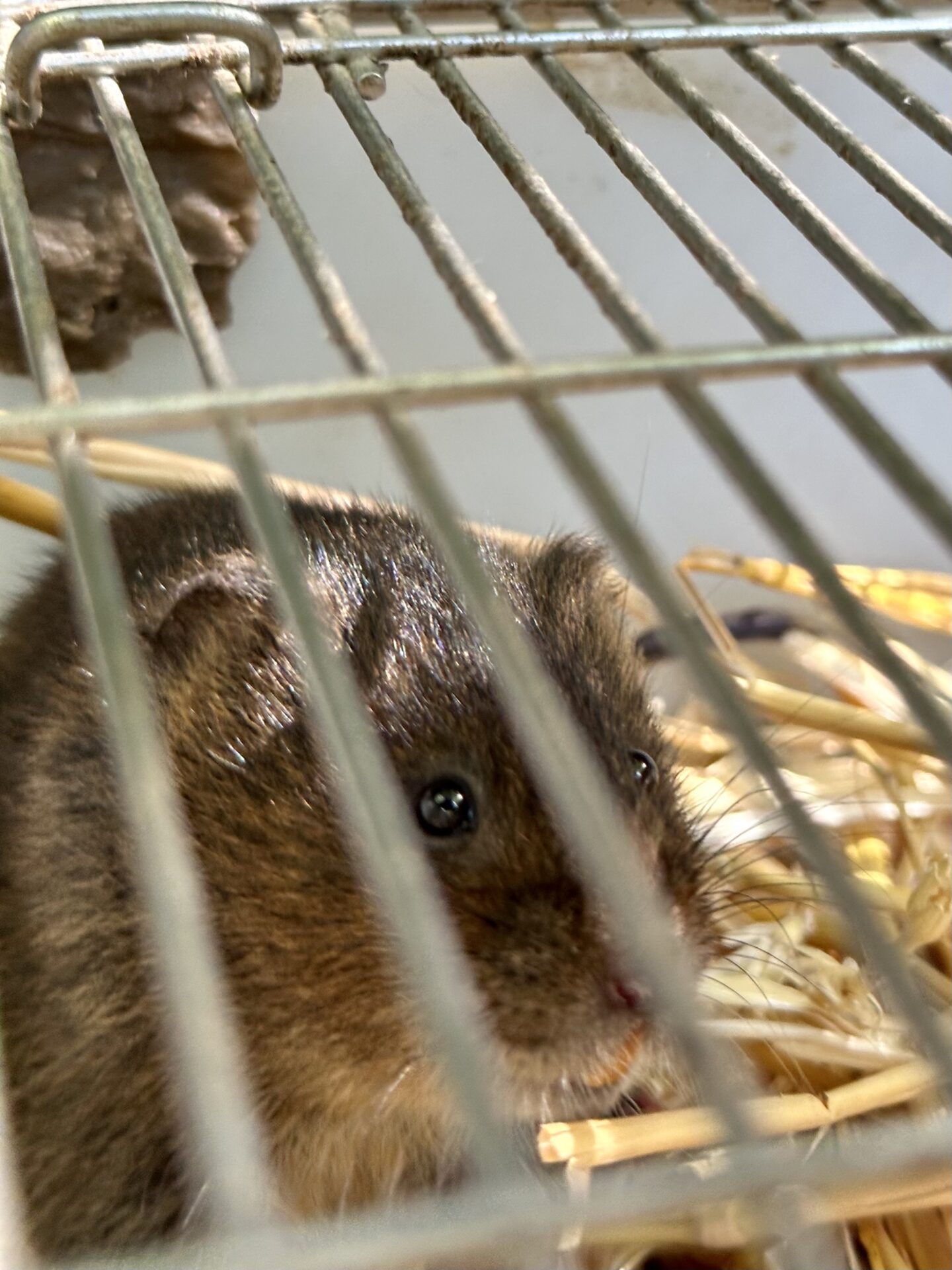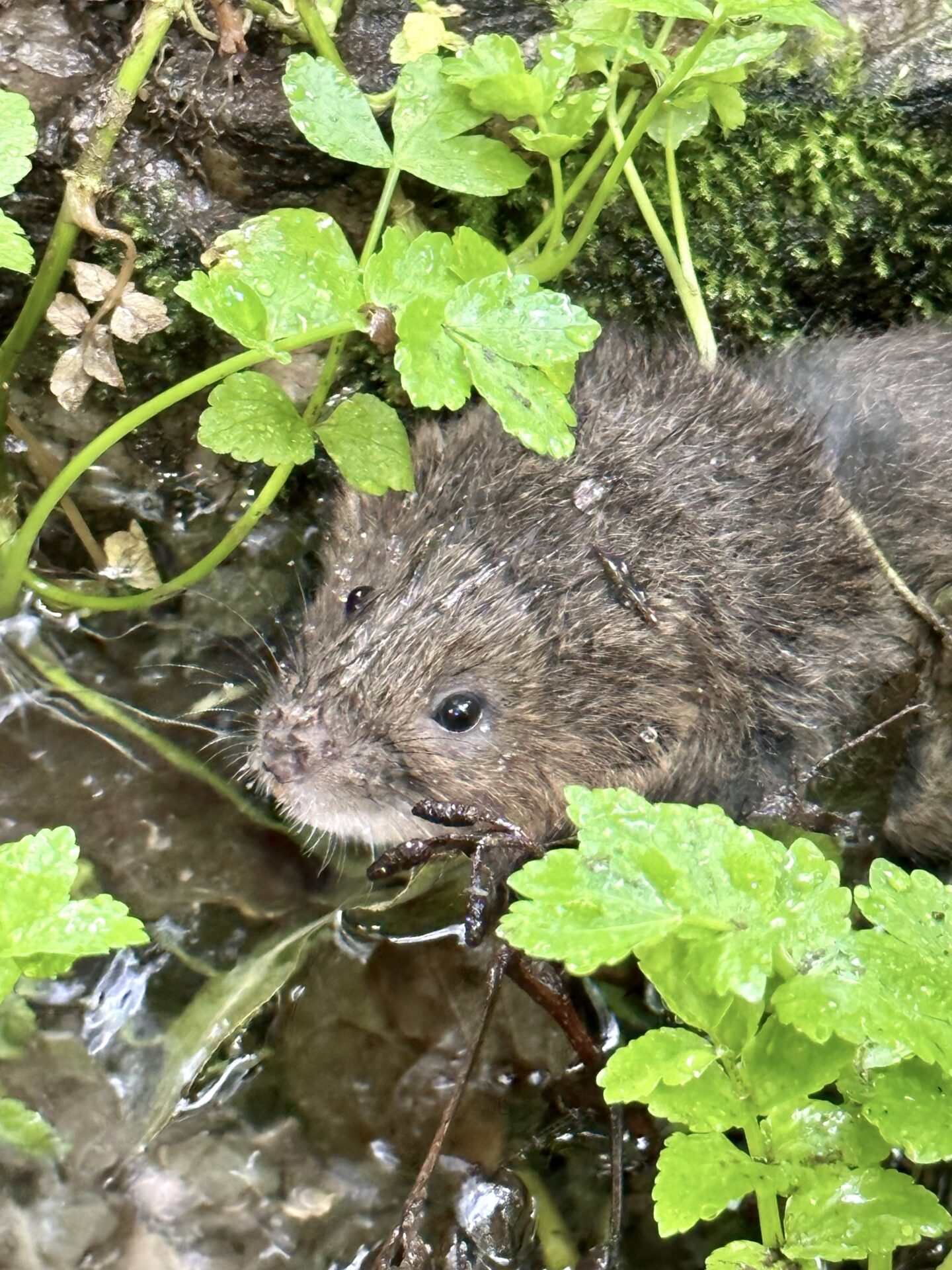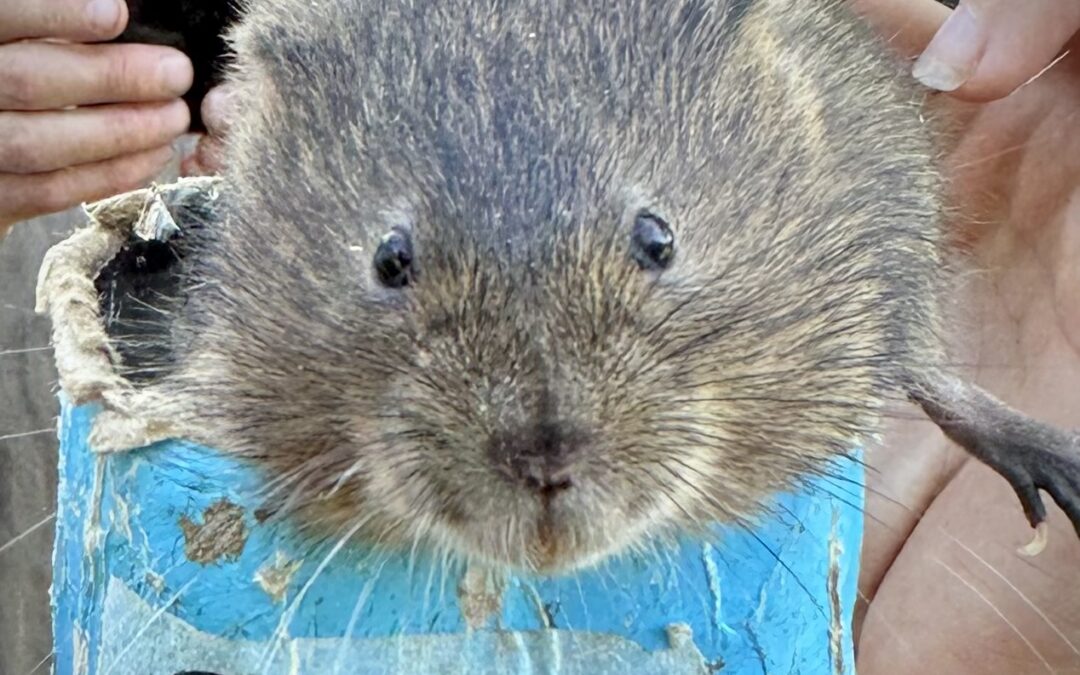
Meet John the first water vole released into the River Gara yesterday. He represents the incredible passion and commitment that has fuelled our reintroduction project and the huge hope we have for the future of the species here.
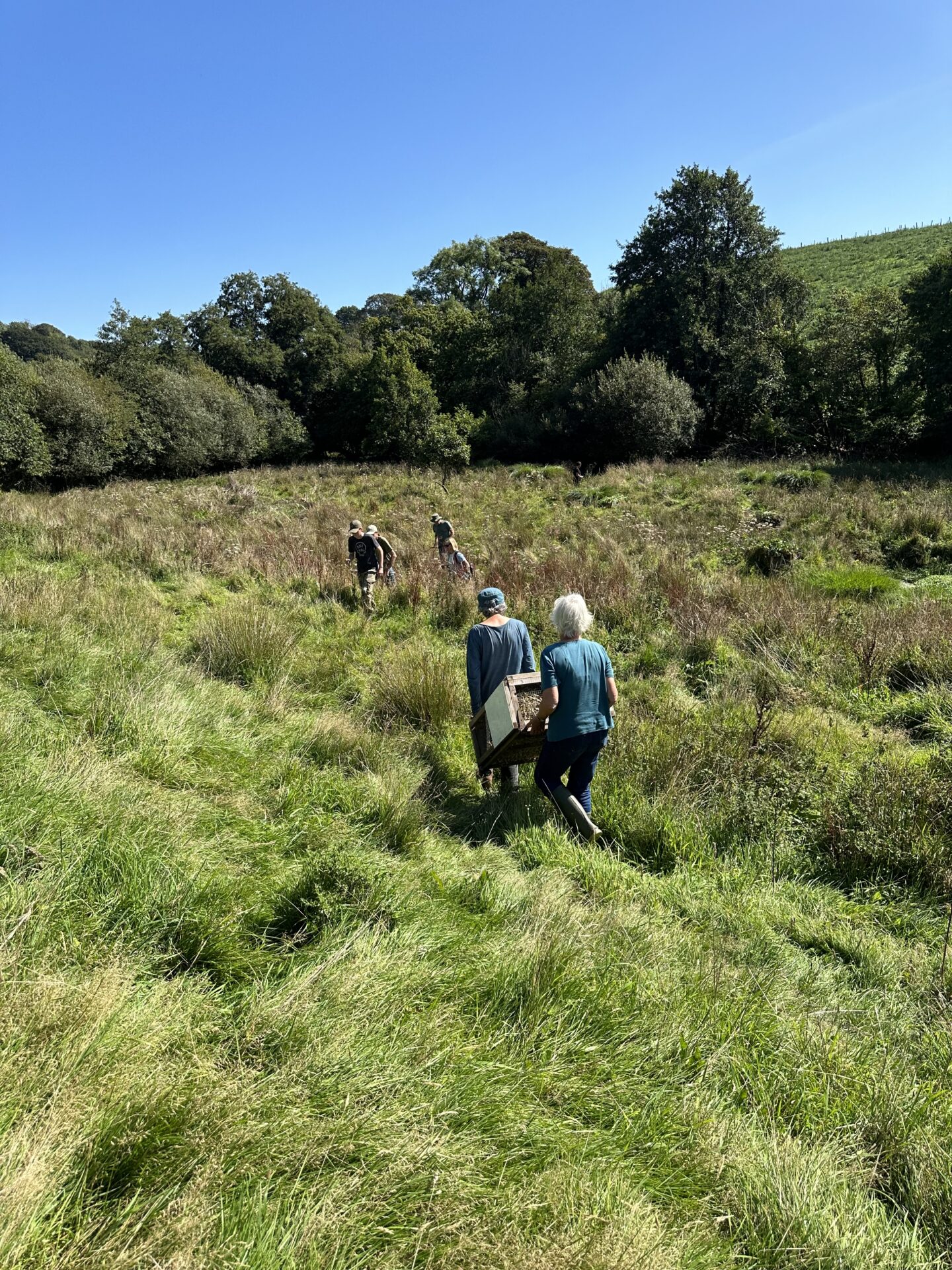
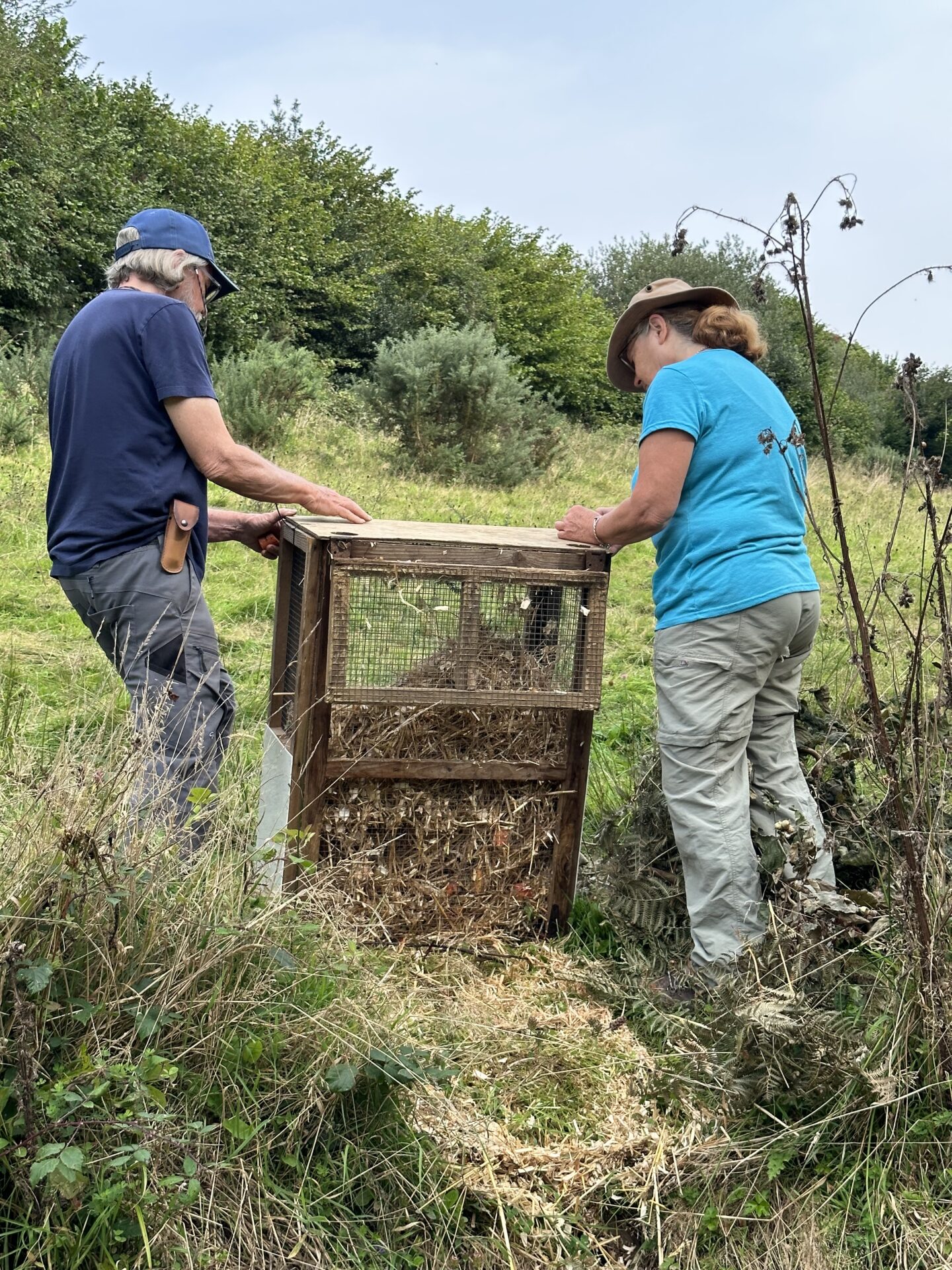
As he leapt from his crate and swam instinctively across the stream it was hard to believe our dream had become a reality. This incredibly special moment was the culmination of two years of planning and collaboration between landowners, experts and a local group of enthusiasts whose passion and commitment has fuelled this vital reintroduction project.
Water voles are a keystone species, meaning they have a disproportionately positive effect on the ecosystem. By nibbling vegetation they create flower rich banks with hugely increased plant diversity. This benefits numerous species including bees, moths, butterflies and other pollinators and subsequently the mammals, birds and bats that feed upon these insects.
The continual cycle of nature can also find water voles on the menu. Predators such as otters, stoats, and herons consider them a source of sustenance. While water vole burrows provide refuge and protected breeding sites for small mammals, reptiles, and amphibians.
Once commonplace across the UK the water vole population has declined by 90% in recent decades. This tragic decline is due to habitat loss and predation by American mink. Water voles were once one of our most familiar riverside animals, but until recently have been absent in Devon since the seventies.
The water voles for our reintroduction were bred locally, and after two years of preparation and careful monitoring of the site, 200 were released into the river Gara and its tributaries which flow down through a quiet valley to Slapton Ley. In total 800 water voles will be released across a two year period. This week’s release is set be repeated next June and August then again in June 2025 to ensure the population has the best chance of thriving.
Understanding the pivotal role of water voles in wetland ecosystems underscores the importance of their conservation. Efforts to protect and restore their habitats are not only vital for these small creatures but also for the myriad of species that depend on them.