
PETE ETHERIDGE
Ecologist. Rewilding and regenerative farming advocate.
Lover of nature, adventure and creating positive relationships.
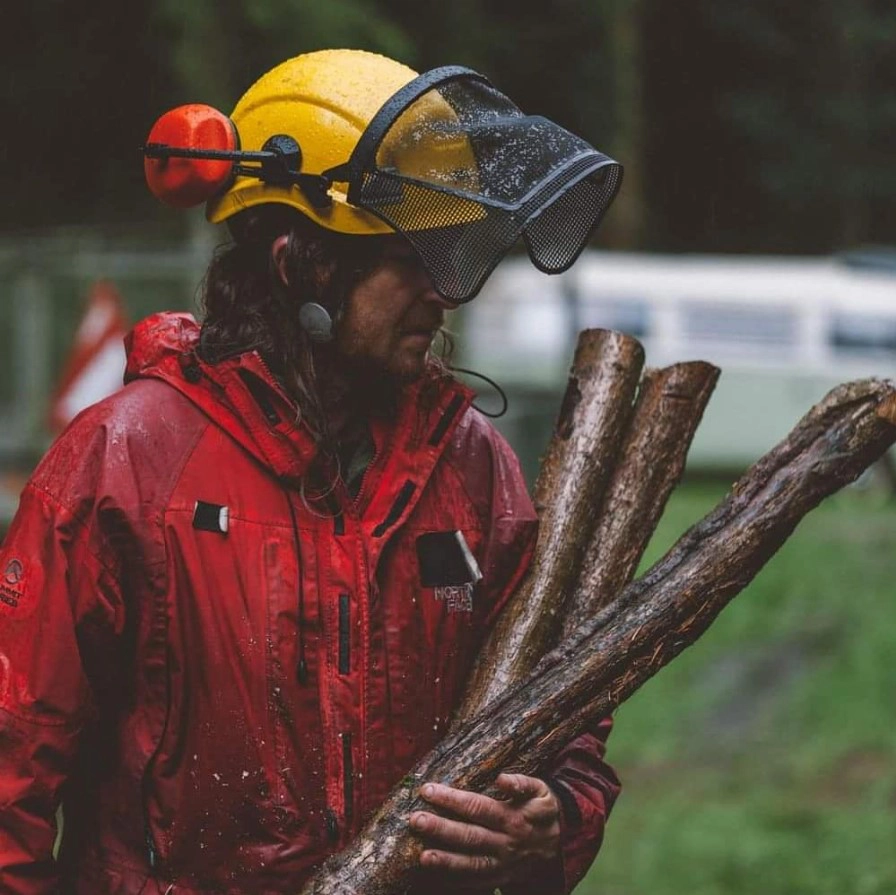
How many of us have thought wistfully of packing our belongings into a van and travelling the world? The prospect of visiting places we are drawn to and exploring what might be out there for us excites our imaginations and allows us to dream of a life we may never lead. When I heard Pete was planning to take some time out to pursue this dream, I was intrigued to find out more.
We met on a chilly day in early February, in a place close to Pete’s heart. Gently nestled within the landscape of Bonsley Woods is The Living Classroom, a sustainable building belonging to Dorset Coppice Group that acts as a hub to share the skills and experience of being, learning and working in a woodland environment.
Pete finds solace in these woods and as we begin our walk, it becomes clear why. The gently moving hazel coppice, peppered with majestic oaks, lush evergreen holly and newly sprouting honeysuckle is alive with birdsong. Birds have always been an integral part of Pete’s life, an important connection to his childhood and a constant source of inspiration and wonder. From nearby trees, nuthatches call out in every direction, great tits and blue tits add their cheerful notes to the woodland chorus, while the distant drumming of a woodpecker reverberates through the air. Above us, two majestic buzzards take flight, wheeling close together across the tops of the ancient oaks, their presence adding a majesty to this woodland landscape.
As we share our love of birds, the conversation meanders towards the elusive dipper. This enigmatic songbird has the amazing ability to hunt underwater and, if you get lucky, can be seen perched on rocks in wooded rivers, bobbing and dipping, then diving into the water to catch its prey. Not part of the New Forest landscape where Pete grew up, he vividly recalls the first time he witnessed a dipper as a teenager while visiting family near Durham...
‘I was utterly mesmerised by this smart brown bird. Observing it rhythmically bobbing, looking about then suddenly diving into the water to forage. I could see the silver bubbles of air collecting on its body.’
Spreading his own wings and moving to Lancaster University to study Ecology could be seen as the start of Pete’s travels. He admits the university’s proximity to the Lake District, where he could immerse himself in the scale and energy of the mountains made it more than a coincidental choice. From here to Somerset then Scotland, Wales, Bristol, Devon and Dorset, Pete’s career has enabled him to observe and often form relationships with some of the most incredible wildlife. This, coupled with his world travels, has afforded Pete the opportunity to experience many creatures and landscapes.
Can you share a memorable encounter with wildlife that has left a lasting impression on you?
‘I’ve always been fascinated by cetaceans and spent hours as a teenager staring through binoculars out to sea. At the age of 15, I was fortunate enough to visit British Columbia, where I spent three days whale watching on Johnstone Strait. I’d recently ‘adopted’ an orca (A6 ‘Strider’) and I’ll never forget seeing him for myself for the first time. Witnessing the sheer power and energy of these majestic animals was an incredible experience’.
While the orcas left an indelible mark on his soul, Pete shares many memorable encounters with wildlife. His work has enabled him the privilege of witnessing some of the best wildlife in the UK.
‘On a survey in the Scottish Highlands, I sat quietly in the heather, watching a short-eared owl quartering the moorland on the other side of the valley. Slowly it drifted toward me, then purposefully flew over and hovered just above my head. For what seemed like ages, long enough for me to look into its bright yellow eyes at least, it regarded me, then gracefully dipped a wing and continued hunting close by. It was as though it had accepted me as part of its landscape.’
Pete was also fortunate to canoe with beavers in Knapdale in Scotland, where they were reintroduced in 2009.
‘Not only did we spend an incredible dusky hour observing the beavers from the water in which they live, a magnificent osprey came to fish close by while we sat quietly waiting for the beavers to emerge.’
It is the experience of encountering these creatures in their own habitat and being accepted as part of their landscape that makes it so special for Pete. It generates within him a deep sense of hope and positivity.
Amidst these grand encounters, Pete also acknowledges the wonder in the seemingly more ordinary moments. The call of a red kite while he’s working in the woodland that speaks to his soul and lifts his spirits, or the first hazel flower heralding the onset of spring. He emphasises the importance of never taking for granted the daily rhythms and beauty of nature that surrounds us.
A few years ago, I first met Pete through his work as an ecologist. Although it was immediately clear he is a man with a deep connection to the natural world, our conversation centred around planning legislation and TPO’s. Now, reconnecting with Pete in a landscape he loves, that is intrinsically connected to our ancestral past, it is evident that if I am to understand why he is choosing to put his career aside for a while, I need to know more of his story. I am keen to understand what first drew him to ecology.
Have you always wanted to work in the environmental sector?
‘I’m lucky to have grown up in an environmentally aware family in a small rural village. Nature was never far from our lives, whether it was watching birds in the garden or heading out at sunset to listen to nightjars churring on the heath.’
At the age of 5 or 6, Pete’s dreams were clear. Already fascinated with birds, in his schoolbook he drew a peregrine, the epitome of grace and power, with a note beside it declaring his aspirations to become a nature reserve warden (and drive a Land Rover!).
Pete's environmental consciousness was cultivated in the embrace of the New Forest, where he grew up. As we delve into his childhood, he recalls that his father had a significant influence on his journey into ecology. Working away for extended periods, Pete’s father provided him and his sister with undivided attention upon his return, and fostered within them both a deep love and respect for nature through shared wildlife adventures...
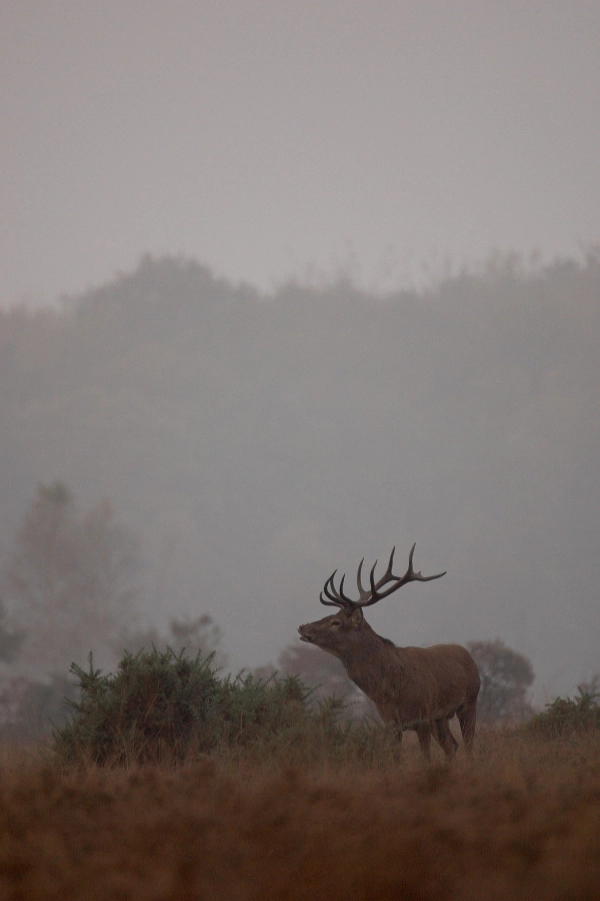
‘Growing up in urban Brighton, Dad immersed himself in the wildlife of the South Downs and the sea. Once a keen scuba diver and still a passionate conservationist, he not only passed on his fascination for nature but also a strong drive to conserve it. We would walk together in the New Forest, visit nature reserves and spend chilly hours sitting in bird hides. I remember listening to rutting red deer roaring, looking for emerging adders in the spring and delighting in a shared love of nature.
My parents recognised my passion from a young age and actively encouraged it. I never felt pressured to pursue a career that focussed on financial income or societal status; instead they gave me the confidence to live a life that feeds my soul, and I am so very grateful for that. They recognised my need to give something back and fully support that I now live my life based on a simple theme - ‘give more than you take’.
The significance of Pete’s relationship with his parents, particularly his father, prompted me to ask about other pivotal influences in his life.
Who or what has been the most significant inspiration in your journey as an ecologist?
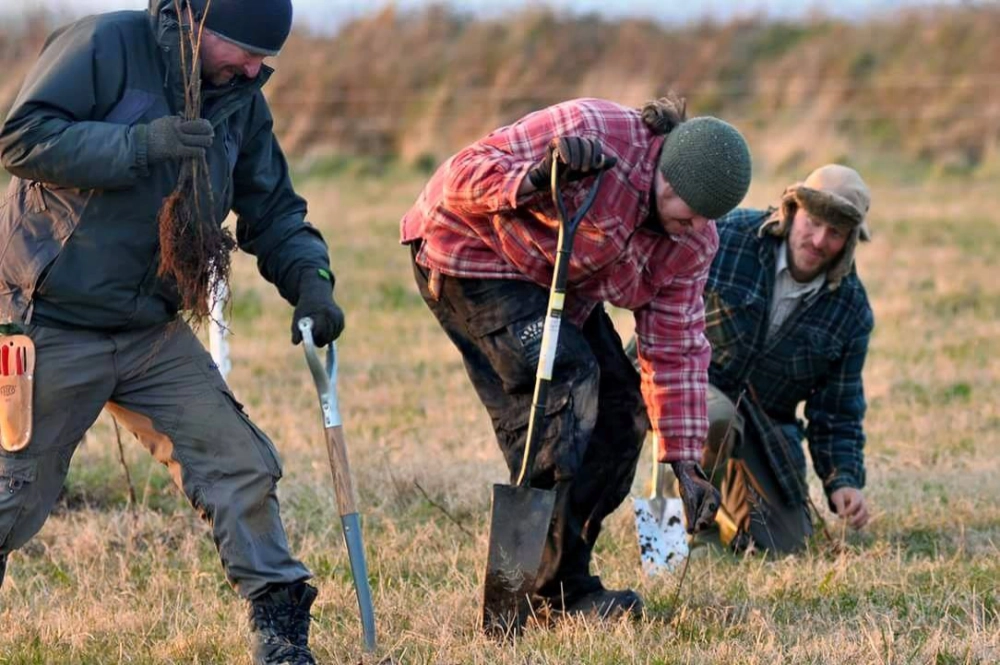
‘Probably the most life affirming experience for me as an adult was the time I spent working with two incredibly inspirational people who showed me that working the land for nature, not for personal wealth can inspire a deep relationship with the natural world and be hugely uplifting and healing to the land and ourselves.’
The profound impact of Rebecca Hosking and the late Tim Green, who Pete worked alongside for several years, can not be overstated. The pair gave up their successful careers, filming wildlife and producing nature documentaries for the BBC, to manage a farm in South Devon. Their dream was to pursue regenerative agricultural practices that would increase the abundance and diversity of wildlife. No easy task when placing this alongside their passion to produce ethical, highly nutritious food while also seeking to reduce their reliance on fossil fuels.
In their pursuit of farming methods more sympathetic to the environment, Tim and Rebecca were keen to discover more about new, traditional and indigenous approaches to land stewardship. Using this knowledge while practising and trialling new and innovative ways of holistic farming, they realised that the ability to observe and connect to the rhythms of nature and the land was key.
Working closely together on the farm, conversation often turned to the connections Tim and Rebecca were making and the relationship between people, farming and nature. Pete was hugely inspired by Tim's questioning approach and carries this with him today.
‘Tim became like an older brother to me. I would go to him with a new idea or plan for the farm and although he would generally approve it, he would always throw in a couple of pertinent questions; questions that hadn’t even crossed my mind. He made me examine my approach and my ‘conventional’ views more than any person I have ever known’.
The importance of constantly challenging systems and tradition and learning from the experience of a wider community has pushed Pete to consider his own views and to view land management and conservation through a new lens.
Hazel trees, laden with quivering catkins, are prominent throughout the woodland in which we walk. They weave a story of the past, a reminder of a time when people lived in harmony with nature. Pete’s work has fostered within him a strong sense of our ancestors' deep connection to the land and the imbalance we have since created. During his travels he hopes to meet folk who share his dream of creating a society able to coexist with nature and to visit innovative and ambitious environmental projects.

What do you hope to learn on your travels?
'Although I am an ecologist with a great deal of experience, I would never consider myself an expert. This would imply I have nothing left to learn and as Ray Mears once said, ‘the natural world is always teaching us lessons.’ I am always open to learning whatever I can, from whoever or whatever I can, be that people, wildlife or the landscape.’
Pete and his partner Rachel are hugely excited by the prospect of the many things they might discover on their travels. Not only about the natural world and the people they meet along the way, but also about themselves. Pete emphasises that their journey is potentially about them giving something back, a way of encouraging others to look at life through a different lens. They hope to cast aside the shackles of conventional living, adapt to the uncertainty of living on the road, and re-engage more deeply with the natural world and the landscape. They see this as an opportunity to learn about themselves and how they adapt and change to a life arguably closer to that of our nomadic ancestors.
From the lush green woodlands of Dartmoor to the expansive landscapes of Scotland, Pete and Rachel’s journey will take them to all corners of the UK and beyond. From small sustainable farms and low impact communities to community-led conservation projects, there is so much to experience and so many connections to make.
As they travel, Pete will not only gain a wealth of experience but become a storyteller, consultant, and connector. Through his love of words and film, he hopes to use this trip to communicate their adventures and to inspire an alternative narrative. He aims to showcase ground roots projects, the spirit of resilient communities and the collaborative efforts shaping a more sustainable future. He also wants to champion that our lives don’t have to be ordinary. We have but one treasured life, and our time on this beautiful planet may be short, so let's get out there and have adventures.
As our time together draws to a close, we return to The Living Classroom. Amongst the leaf litter and grassy verges tiny snowdrop shoots push their way up to the sky. Their welcome emergence, brought on by the changing light of longer days, signifies warmer weather and the imminent awakening of the woodland.
From the tranquillity of Bosley Woods to the expansive landscapes of Scotland and beyond, Pete's encounters with wildlife have left a mark on his soul that fuels his desire to pursue a deeper connection to the natural world. Whether majestic orcas or the call of a red kite, his experiences have shaped his perspective on life and fueled his passion for environmental conservation.
As Pete and Rachel embrace the uncertainty of life on the road, their journey symbolises a return to a more profound connection with the natural world and a departure from conventional living. Through his consulting, connecting and storytelling, Pete hopes to showcase the extraordinary potential within us all and encourage everyone to embark on their own adventures. Pete's journey is not just a personal exploration but a call to action, reminding us all that our time on Earth is precious, and our choices can shape a more sustainable and extraordinary future.
