
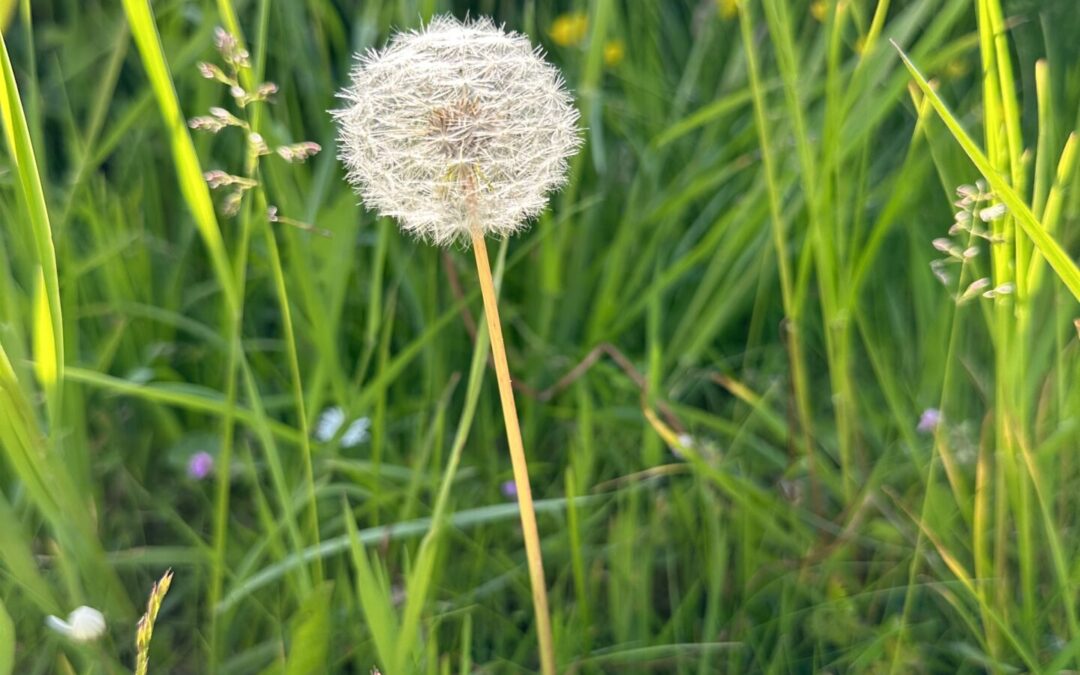
So what effect does leaving the grass to grow long in May actually have? Other than looking amazing and filling our hearts with joy and hope.
My neighbours have all been gently persuaded to give it a go this year and our verges are looking amazing! Not satisfied with simply admiring the beautiful display of wildflowers and gently swaying grasses, I had to find out what had actually grown. Yes passers-by probably thought the sight of me with my head in the grass, identification book in hand, was a little bit more strange than usual, but I just couldn’t resist. And here's what I discovered...
45 species of wildflowers and grasses identified so far, including oxeye daisy, red clover, meadow buttercup and my favourite grass, crested dog’s tail, all of which are positive indicators of meadow health.
Other notable species include early purple orchids which have been thriving here for over 20 years, bird’s-foot-trefoil, knapweed, cuckooflower and wild carrot which may have arrived due to a few seeds I scattered last autumn. These and most of the other species identified are all present on my little patch which has been managed for wildflowers for a decade or more, but what about my neighbours patches that are relatively new to the game.
I had assumed I would see the basics; dandelion, daisy, clover, possibly a little red campion and some cow parsley as it is common in the hedgerows. Imagine my surprise and excitement when I found germander speedwell, cut-leaf cranesbill, cat’s ear, yarrow, vetch, sheep sorrel, sweet vernal grass, rough chervil and fleabane to name just a few. Across my neighbours' new mini meadows I have counted 35 to 40 species of wildflowers and grasses, all providing food and protection for a huge variety of insects and their offspring which will in turn feed the swallows and blue tits who are nesting nearby and many other birds and mammals that live here too.
If you are leaving your lawn to nature this year, have a closer look and see how many different varieties of plants you have enabled to grow, no need to name them all. Now that you understand what a positive difference you are making, perhaps you might even consider Don’t Cut Too Soon June and Let it Dry July...?
Note:
If you would like to create a beautiful wildflower meadow where your lawn once was, leave the grass and flowers until they have gone to seed (late August), scythe or carefully strim it to enable any animals to escape then leave it for a few days to allow the seeds to drop onto the soil. Now remove the grass so that it doesn't put nutrition back into the ground, wildflowers thrive on barren soil.
You might want to add a few wildflower seeds to your meadow. Make sure they are native to your area and perhaps consider a little yellow rattle which helps to reduce the abundance of grass.